
Stephanie Feldstein
My culture’s rituals guide us through the loss of the people we love, but it’s less clear how we’re supposed to mourn the loss of beloved foods and the disappearing ecosystems they need to grow.
Judaism, like many other traditions, is deeply rooted in food. Even in times of grief, it connects us to family, community, and thousands of years of history.
But the foods I grew up with could be lost to climate change.
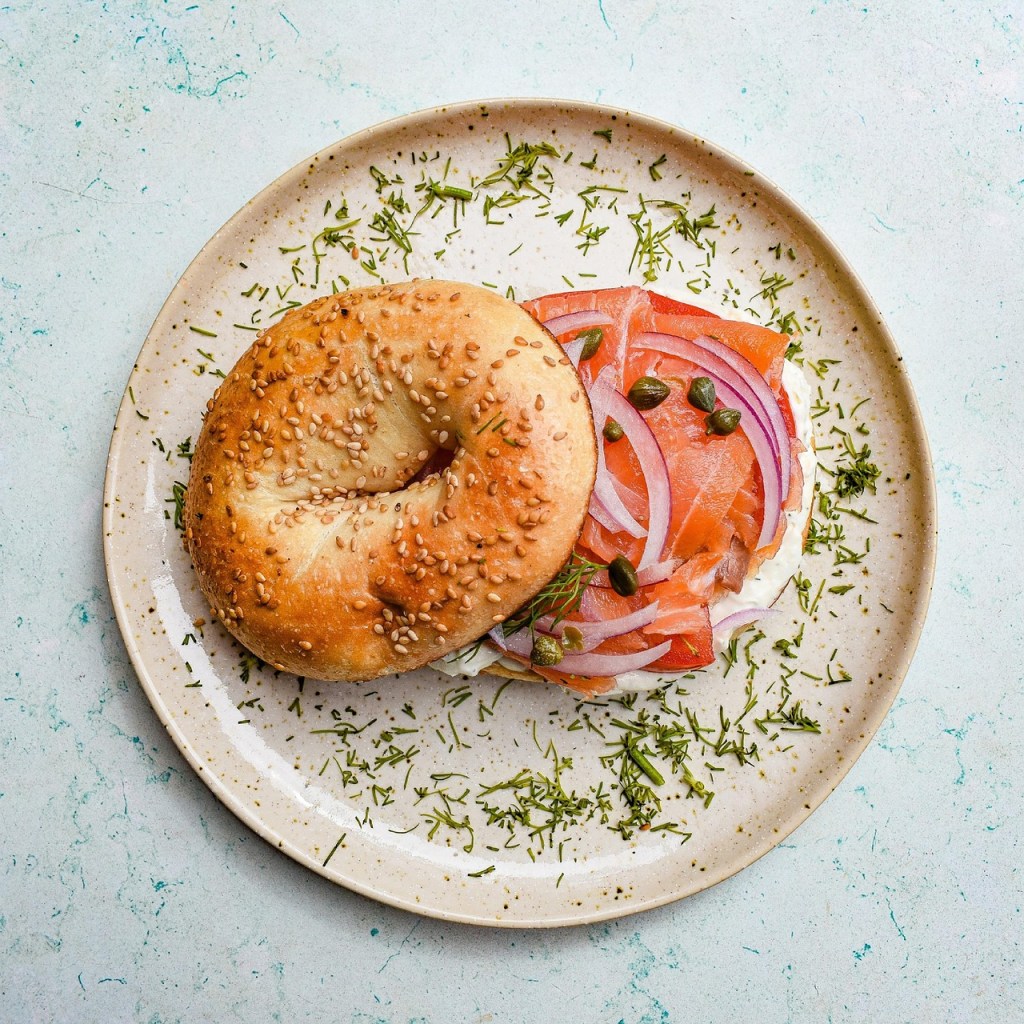
Food has always been an important part of both endings and beginnings. At my best friend’s shiva last year, we honored her life with her favorite foods—bagels with lox, served at so many of our holiday gatherings and lazy weekends with family. One study found that at least a quarter of the world’s wheat production will be lost to extreme weather and drought.1 And salmon eggs struggle to survive in higher water temperatures and other climate-related changes to stream quality.2
To celebrate a sweet new year, we dip apples in honey. Warming temperatures could cause apples to blossom too early3 and suffer longer pest seasons and extreme frosts and heat that can significantly reduce yield,4 while rising carbon dioxide is decreasing protein levels in pollen,5 making it a less suitable food source for bees to keep producing honey.
Food is also how we tell our stories. On Passover, we eat matzo, made from wheat, as we recount the hardships we faced as we were freed from slavery.
We eat latkes to remember our perseverance and the miracle of Hanukkah. But potatoes are sensitive to drought.6 With climate change increasing the severity and frequency of droughts, water shortages, unpredictable rainy seasons, and less snowpack in mountains to melt into fields in the spring, it will be harder for many farmers to grow this staple food.
Wine is an important part of our ceremonies, but wine grapes can be fickle in terms of the amount of heat and moisture needed to produce the right balance of sugar, acid, and tannins. Wine grapes probably won’t go extinct, but the flavor, alcohol content, regions, and varieties may change,7 ultimately changing the drinking experience.
In Judaism we bury our dead quickly. Traditionally the deceased are buried within 24 hours of their passing, though today it’s often delayed a day or two to allow loved ones to travel to the funeral. We bury them as soon as possible both to comfort the dead and begin the period of mourning for the living.
Will we even know the moment our beloved, traditional foods are gone? Or will we be like the wild species that are slowly moving to higher elevations in search of cooler climates, and the food sources that grow there, until one day there’s nowhere left to go and nothing left to eat?
In many ways Jewish tradition is prepared for this moment. Our holidays tend to center around remembering what we’ve lost and honoring the miracle of what we still have. We also have holidays and traditions that celebrate nature and our responsibility to care for the world.
We could do the same with our food.
Traditions can adapt as times change. We can choose to shift our holiday menus away from higher-emission foods like beef brisket toward plant-based foods that have a lower impact on our climate and biodiversity.8 We can take a moment at every meal to recognize the importance of protecting the planet to protect our sacred traditions.
Then we can turn that recognition into action.
Fighting climate change needs to be part of who we are to protect the future of our food. Within the food system, that means ending factory farming and shifting from the overproduction and overconsumption of climate-intensive meat, seafood, and dairy toward healthy, sustainable plant-rich diets.9 Beyond what’s on our plates, it means demanding a shift from fossil fuels to wildlife-friendly renewable energy.
We need to get politically involved to protect what we love, including the ability to pass down our food traditions to the next generation.
Food is more than just nutrition. Regardless of religion, every person has foods they grew up with that helped shape their memories and identity. And there’s a good chance that many of those foods are also threatened by climate change: the same temperature fluctuations, unpredictable weather, extreme storms, and drought that affect crops from apples to wine grapes affect all life on Earth to some degree.10 Studies have shown that climate change is reducing both crop yields and the nutrient density of foods.11 It’s threatening wildlife like pollinators12 that our agriculture depends on.
Many of these climate-threatened foods have spiritual significance or are part of rituals that have been passed down for millennia to honor the dead. I wouldn’t know how to mourn their loss, especially since part of Jewish tradition is bringing these very foods to the mourner.
But in the end, our mourning rituals aren’t about the food that’s served. We grieve because life is sacred. If we start extending that fundamental belief not just to people, but to the world around us, then there’s still time to save our traditions, our foodways, and our planet from the worst effects of climate change.
- Senthold Asseng, et al., “Rising temperatures reduce global wheat production,” Nature climate change 5, no. 2 (2015): 143-147. ↩︎
- Lisa G. Crozier and Jared E. Siegel, “A comprehensive review of the impacts of climate change on salmon: Strengths and weaknesses of the Literature by life stage,” Fishes 8, no. 6 (2023): 319. ↩︎
- Peter Pfleiderer, et al, “Increasing risks of apple tree frost damage under climate change,” Climatic Change 157, no. 3 (2019): 515-525. ↩︎
- Bruno Larue and Alan P. Ker, “Climate change, production and trade in apples,” Canadian Journal of Agricultural Economics/Revue canadienne d’agroeconomie 72, no. 3 (2024): 325-346. ↩︎
- Lewis H. Ziska, et al., “Rising atmospheric CO2 is reducing the protein concentration of a floral pollen source essential for North American bees,” Proceedings of the Royal Society B: Biological Sciences 283, no. 1828 (2016): 20160414. ↩︎
- Muhammad Waqar Nasir and Zoltan Toth, “Effect of drought stress on potato production: A review,” Agronomy 12, no. 3 (2022): 635. ↩︎
- Lee Hannah, et al., “Climate change, wine, and conservation,” Proceedings of the national academy of sciences 110, no. 17 (2013): 6907-6912. ↩︎
- Marco Springmann, et al., “Options for keeping the food system within environmental limits,” Nature 562, no. 7728 (2018): 519-525. ↩︎
- Center for Biological Diversity, et al., “The Just Transition from Industrial Animal Production to Equitable, Humane and Sustainable Food Systems,” (2024). https://www.justfoodtransitionroadmap.com. ↩︎
- Valérie Masson-Delmotte, , et al., “Climate Change and Land: an IPCC special report on climate change, desertification, land degradation, sustainable land management, food security, and greenhouse gas fluxes in terrestrial ecosystems,” Intergovernmental Panel on Climate Change (2019). ↩︎
- William H. Dietz, “Climate change and malnutrition: we need to act now,” The Journal of clinical investigation 130, no. 2 (2020): 556-558. ↩︎
- Jennifer Marshman, et al., “Anthropocene crisis: climate change, pollinators, and food security,” Environments 6, no. 2 (2019): 22. ↩︎
Biography
Stephanie Feldstein is the Population and Sustainability Director at the Center for Biological Diversity, where she advocates for a just transition to equitable, humane, and sustainable food systems that honor cultural and biological diversity. She is the author of The Animal Lover’s Guide to Changing the World and more than a dozen children’s books on wildlife and environmental issues.
 gradfoodstudies.org